PROJECT 09 / April 2026
Air diffuser performance
Pressure measurements and flow separation
Michigan State University
How does diffuser opening angle affect pressure recovery and flow separation?
My contribution
I helped lead the team and contributed across the experimental and reporting work.
Our team investigated a converging and diverging duct with diffuser opening angles from 0 to 30 degrees in 5 degree increments. The study compared pressure recovery with the behavior of the flow near the diffuser exit.
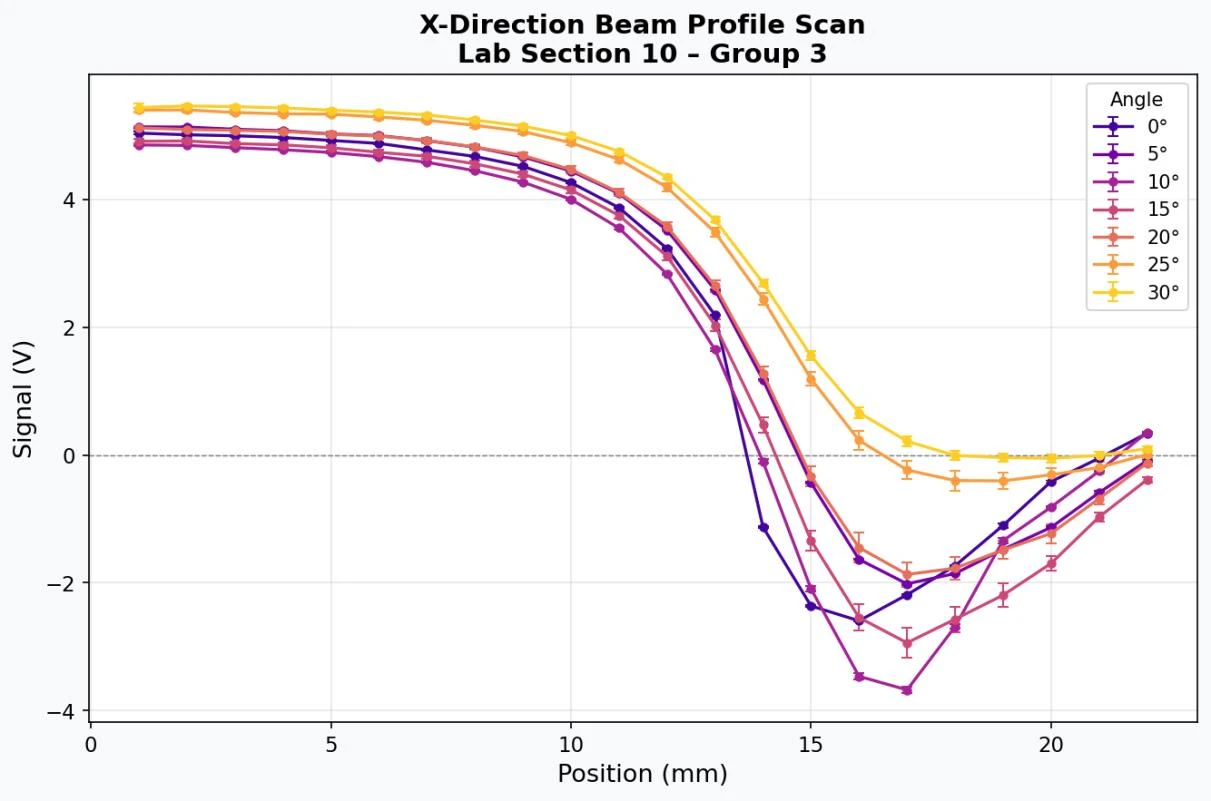
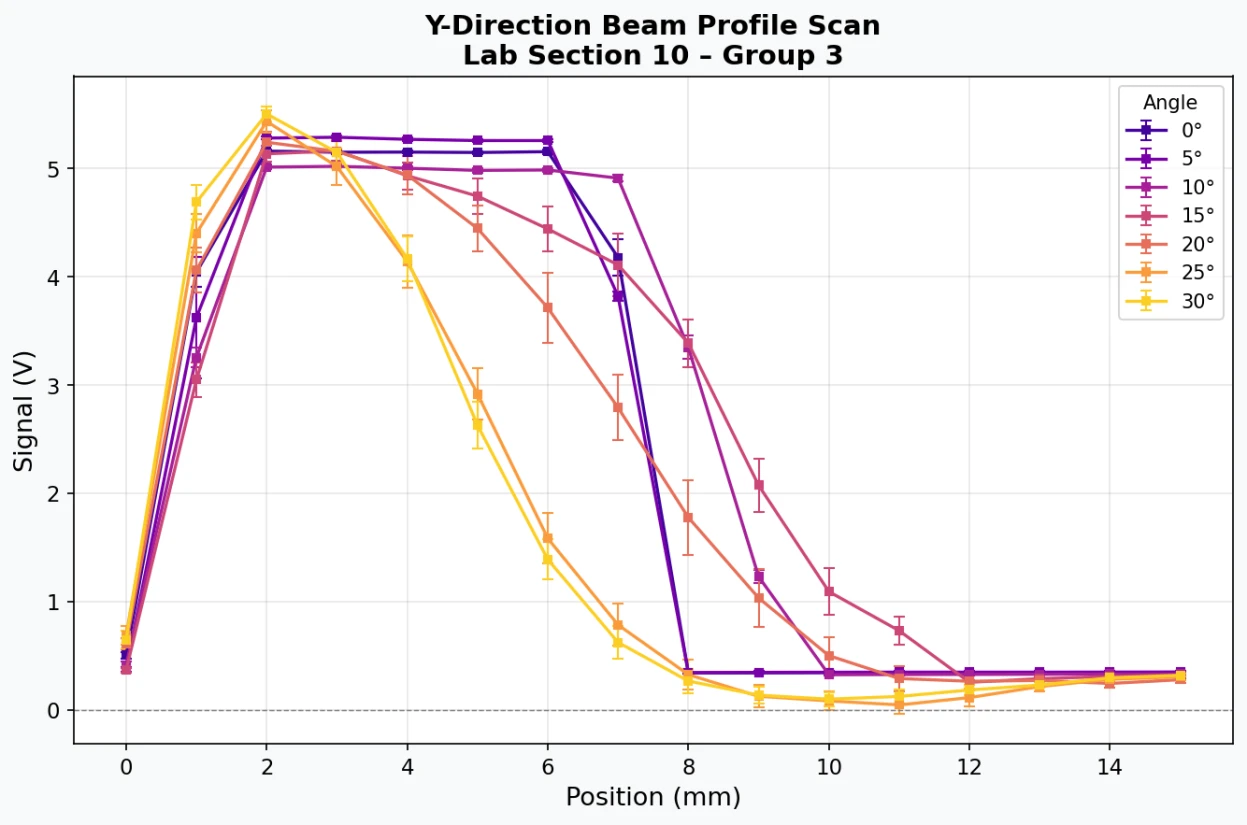
The experimental method used wall pressure taps connected to Validyne pressure transducers. A Pitot probe provided an inlet reference, and traverses at the exit were used to examine the flow profile for selected angles. Measurements were taken after the facility reached steady conditions.
The analysis compared actual pressure recovery with the ideal value from one dimensional flow theory. It also considered how low momentum regions near the walls can limit useful pressure recovery as the opening angle grows.
The supplied profile plots show signal voltage against probe position. They are presented here as signal profiles rather than calibrated pressure or velocity plots.
The report proposed testing angles in smaller increments and varying the inlet velocity to investigate the effect of Reynolds number.
Studied the relationship between diffuser geometry, pressure recovery, and flow separation.
The process
- 01
Compare diffuser opening angles at steady flow
- 02
Measure wall pressure and examine exit profiles
- 03
Evaluate recovery and identify follow up measurements
Source: Team air diffuser performance report supplied by Daniela Ojeda.