PROJECT 08 / Four week project
Slider crank design and build
Concept development, kinematics, and assembly
Michigan State University
How can a simple mechanism turn rotation into controlled linear motion?
My contribution
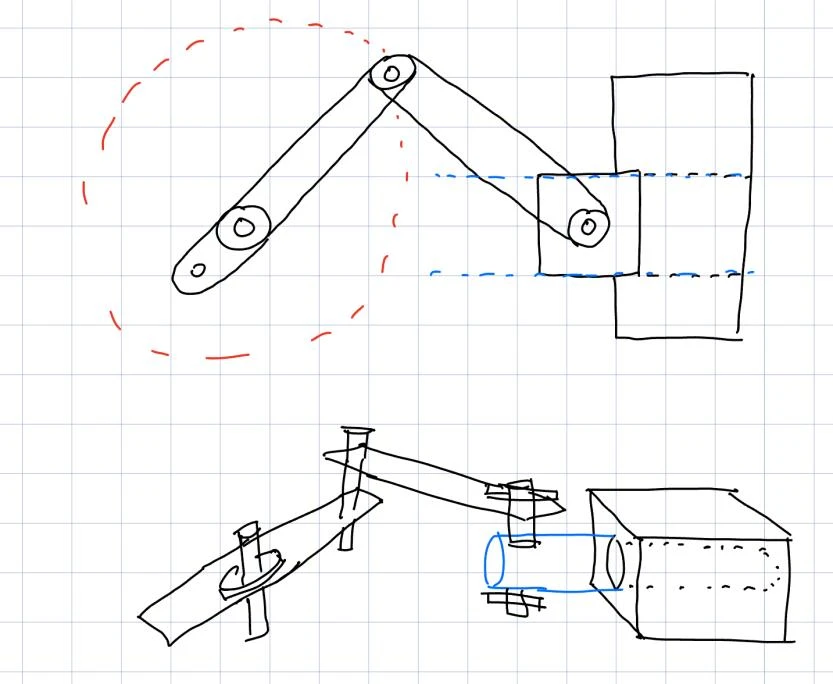
The mechanism needed to convert a complete crank revolution into smooth reciprocating motion and continue operating upside down. I developed one of the five initial concepts, helped lead the team, and contributed across the project. We combined ideas into a final design within a four week schedule.
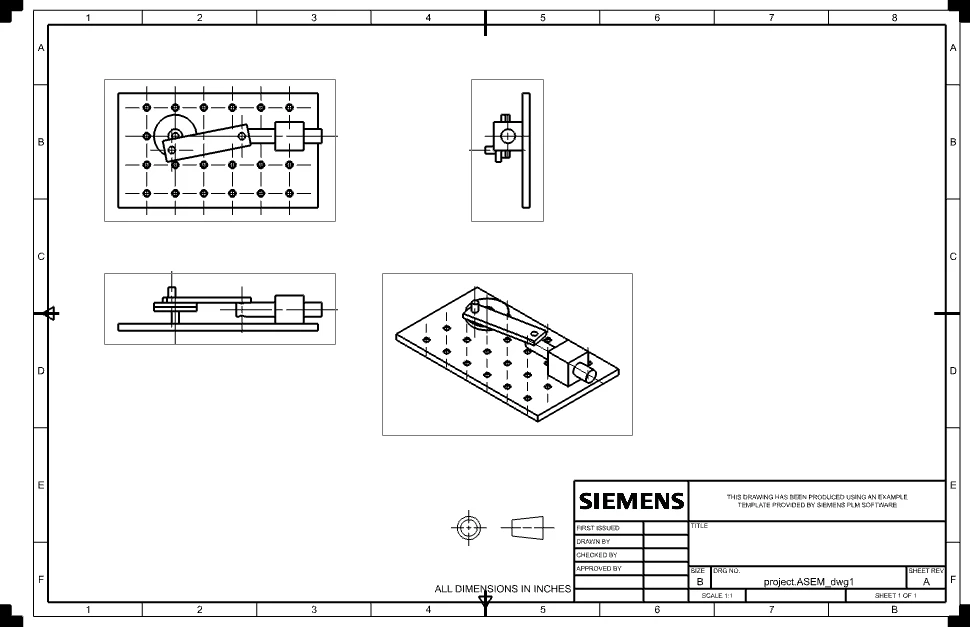
We selected materials with weight and machinability in mind and used stock cutting, hole layout, center punching, drilling, and assembly in the Manufacturing Teaching Lab. The project also combined machined components with additive manufacturing. Each team member contributed to the final report and presentation.
The mechanism has one degree of freedom. The team analyzed its position and velocity over a full revolution in MATLAB, including connecting rod angle, slider displacement, and transmission angle. The position analysis gave a 1.0 inch slider stroke.
The completed mechanism produced the intended motion and operated upside down, but the build revealed three useful design lessons. A missing alignment support led to a washer stack, toggle positions made startup difficult, and the mechanism needed a more intuitive hand crank. The next revision would address alignment, evaluate a small offset, and add a dedicated handle.
Built a working slider crank and documented alignment, startup, and usability improvements.
The process
- 01
Develop concepts and select the mechanism geometry
- 02
Analyze motion and prepare component drawings
- 03
Manufacture, assemble, and review the build
Source: Team mechanism design and manufacturing report supplied by Daniela Ojeda.